 Pisa Tours from Florence
Home › Guides › Why Is the Leaning Tower of Pisa Leaning?
Why Is the Leaning Tower of Pisa Leaning?
Why is the Leaning Tower of Pisa leaning? The tower was never meant to lean: it began tilting in the 1170s because its foundations sit in soft ground. This guide covers the geology, the engineering rescue that cut the tilt from 5.5 to about 4 degrees, whether it is safe, and how to climb it on a day trip from Florence.
Quick answer The short answer on why the tower leans
The Leaning Tower of Pisa leans nearly four degrees because it was built on soft ground of mud, sand and clay. It started tilting during construction in the 12th century, and work between 1993 and 2001 reduced the tilt from 5.5 degrees to 3.97 degrees. Sensors show no movement since 2008, and engineers expect it to stay stable for at least 200 years.
Key takeaways
- Climb it yourself on a half day trip to Pisa from Florence with optional tower entry.
- Travel by rail instead with a Leaning Tower of Pisa tour from Florence by train that includes tower and cathedral tickets.
- Want two cities in one day? Book the Pisa and Lucca day trip from Florence by coach.
- Compare every option on pisa tours from florence.
Why does the Leaning Tower of Pisa lean?
It leans because its foundations rest on soft ground that settled unevenly under one side of the building.
The cause is geology, not design. The soil beneath the tower is mud, sand and clay with fairly high water tables, so the heavy stone bell tower pressed into ground that could not hold it evenly.
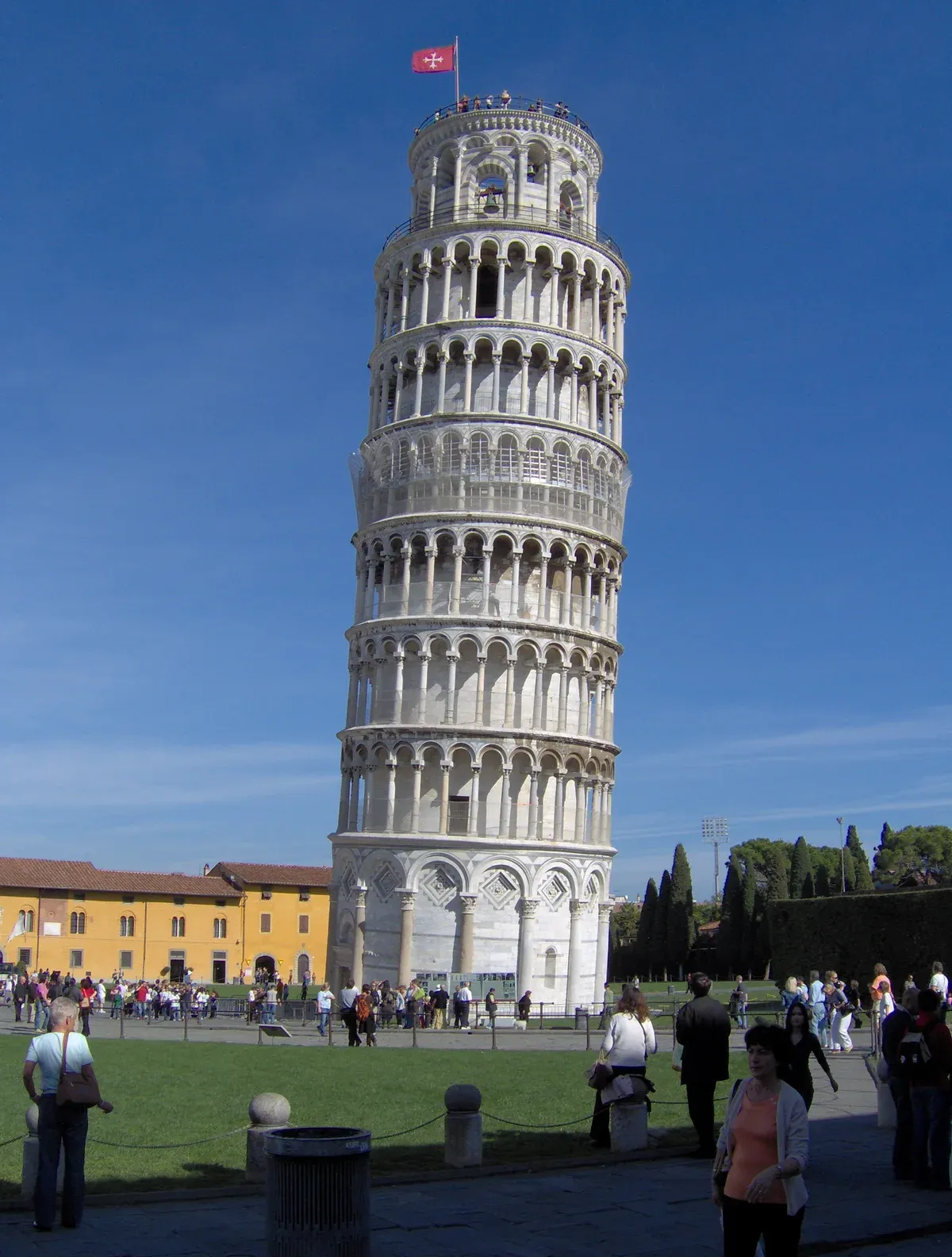
Seen from the side, the lean of the tower is plain. Photo: No machine-readable author provided. Loulou73~commonswiki assumed (based on copyright claims)., CC BY-SA 3.0, via Wikimedia Commons
Soft soil and uneven settling
The tower is the freestanding bell tower of Pisa Cathedral. The lean became apparent in the late 1170s, after three of its eight stories were completed, caused by uneven settling in soft ground. Construction had started in 1173, and when the third floor was built the tower had already bent 5 cm to the southeast.
The name of the city hints at the problem. Pisa got its name around 600 BC from a Greek word meaning marshy land, so the ground under the square has been soft for a very long time.
How was the tower built, and why did it take so long?
The foundations were laid on 9 August 1173 and construction ran in three stages over 199 years.
A build time of almost two centuries sounds like chaos, but the delays may be the reason the tower is still standing.
Builders made the lean worse
Later builders tried to correct the tilt by making the new stories slightly taller on the short side. Giovanni di Simone used this trick, and it backfired: the added weight on one side made the tower sink further. That is why the tower has a slight curvature, a gentle banana shape rather than a straight tilt.
How do they keep the Leaning Tower of Pisa from falling over?
Engineers closed the tower in 1990 and siphoned earth from under the foundations, which reduced the lean by 17 inches.
By 1990 the tilt had reached 5.5 degrees and the tower was closed to visitors. The rescue project that followed is one of the great engineering stories of the century.
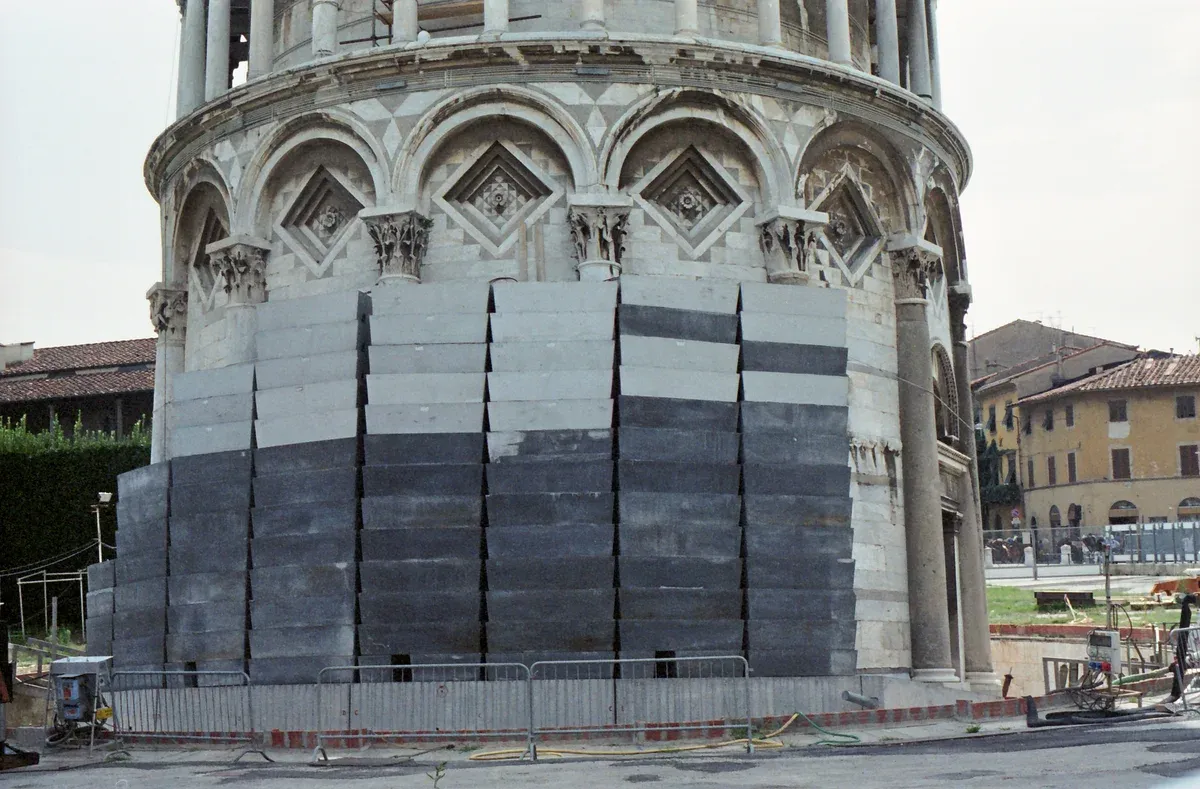
The base of the tower sits on soft ground, which is why it tilted. Photo: Rolf Gebhardt, CC BY-SA 3.0, via Wikimedia Commons
What the engineers did
Between 1993 and 2001, teams removed soil from beneath the foundations rather than propping the tower up, letting it settle back gently. The work was completed in May 2001 and cut the tilt to 3.97 degrees.
Sensors showed the motion had stopped in 2008, with a total improvement of 19 inches. Before the repair the tower had been tilting about 2 millimetres per year, and there has been no measured movement since 2008.
Is it possible to straighten the Leaning Tower of Pisa?
Full straightening was never the goal, because the lean is why millions come. Engineers instead reduced the tilt to a safe angle while keeping the character of the building, and they expect it to remain stable for at least 200 years.
Is the Leaning Tower of Pisa safe, and is it going to fall?
Yes, it is safe: no movement has been measured since 2008 and engineers expect stability for at least 200 years.
This is the question every visitor asks, and the answer from the engineers is reassuring.
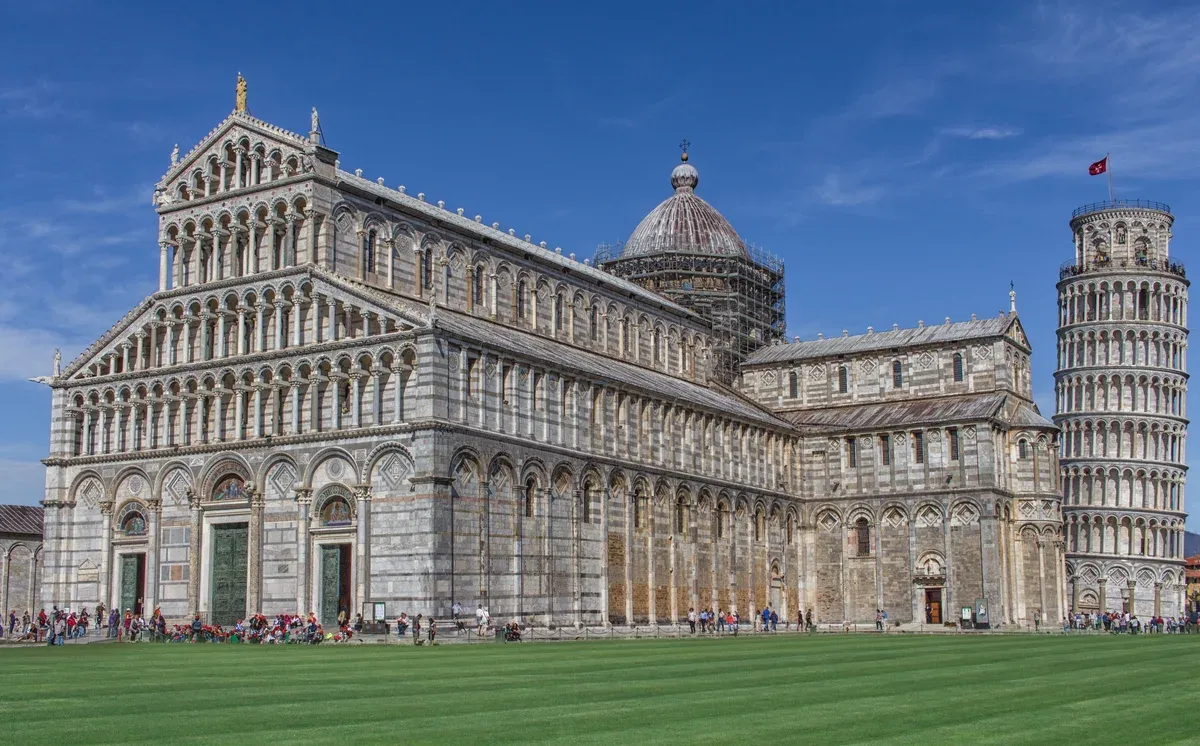
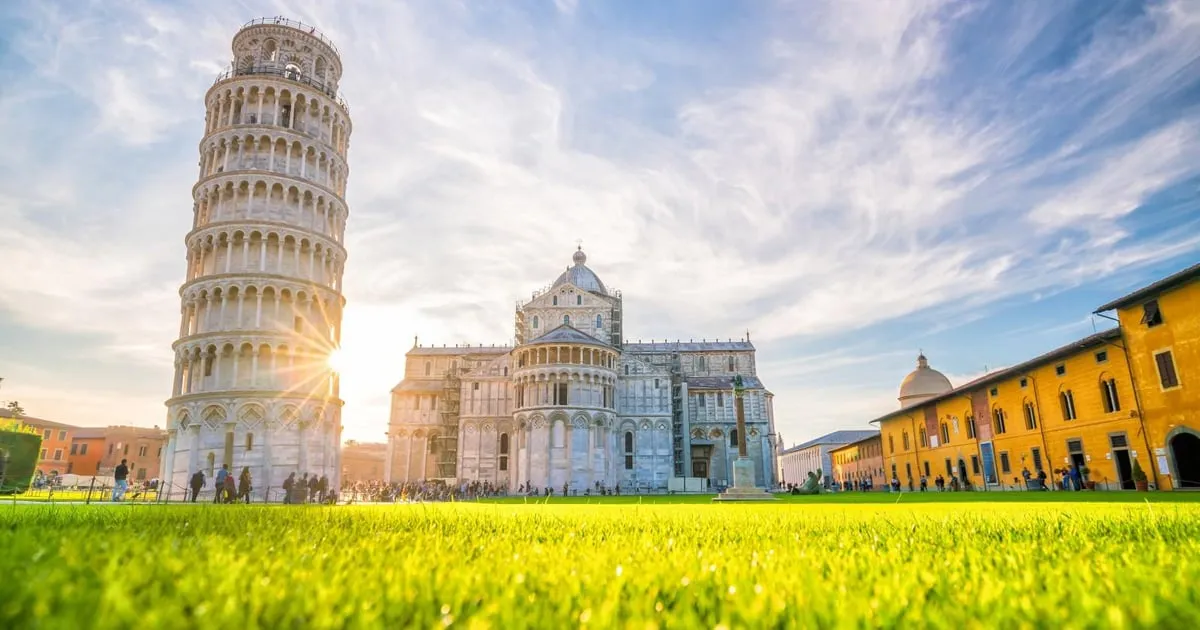
The tower stands beside the Cathedral on the same patch of ground. Photo: Ray in Manila, CC BY 2.0, via Wikimedia Commons
Will Pisa ever fall
All the signs point to no. Sensors confirmed the movement stopped in 2008, and the engineers behind the stabilization project expect the tower to stay standing for at least 200 years. The tower survived centuries of soft-ground creep and earthquakes before any modern intervention, so its current state is the most stable it has been in living memory.
One curiosity backs this up: even the flagpole on top is vertical rather than following the angle of the tower below, a small marker of how precisely the structure is monitored.
Tours That Fit
See the tower up close on a day trip from Florence, with the option to climb it.
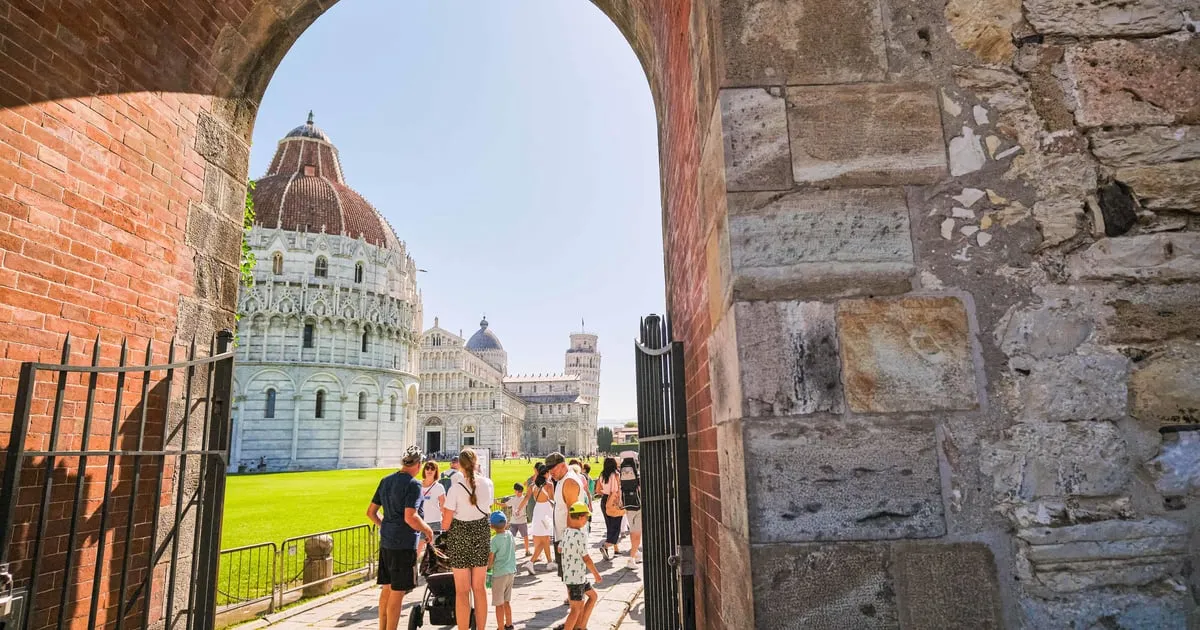
Ciaoflorence Half-Day Pisa Tour from Florence with Optional Leaning Tower
The classic half day: a coach to Pisa, a walk in along the old walls, and the choice of a guided Cathedral visit and a skip-the-line tower climb on top of the bus seat.
- Category
- Half-day Pisa trip
- Cancellation
- Free cancellation 24h
- Operator
- Ciaoflorence Tours & Travel
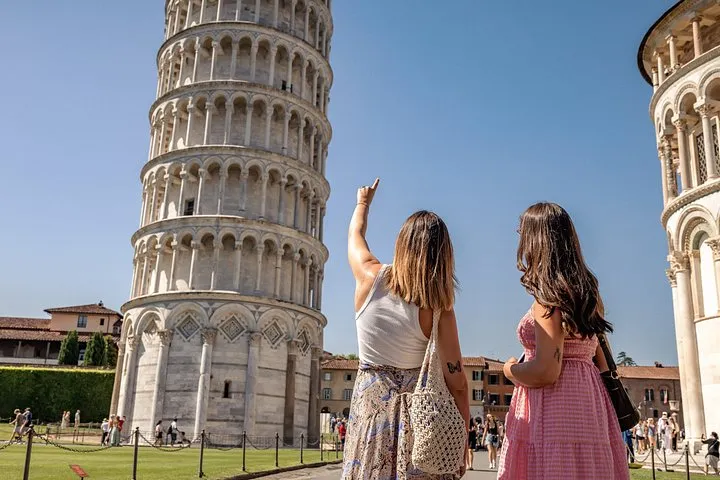
Gray Line Half-Day Afternoon Trip to Pisa from Florence with Optional Tower Entry
An afternoon coach trip that leaves Florence after lunch, with a licensed guide on the Piazza dei Miracoli and the Leaning Tower climb as an option you add at booking.
- Category
- Half-day Pisa trip
- Cancellation
- Free cancellation 24h
- Operator
- CAF Tour and Travel (Gray Line Florence)
Day Trip to Pisa by Train from Florence with Leaning Tower and Cathedral Tickets
The only Pisa trip here with the Leaning Tower and Cathedral tickets in the listing price: you travel by train from Santa Maria Novella and visit without a guide.
- Category
- Half-day Pisa trip
- Cancellation
- Free cancellation 24h
- Operator
- Around City Florence
How big is the tower, and why is it famous?
It stands 55.86 metres on the low side and 56.67 metres on the high side, weighs an estimated 14,500 tonnes and leans nearly four degrees.
The size and the tilt together make the tower instantly recognisable anywhere in the world.
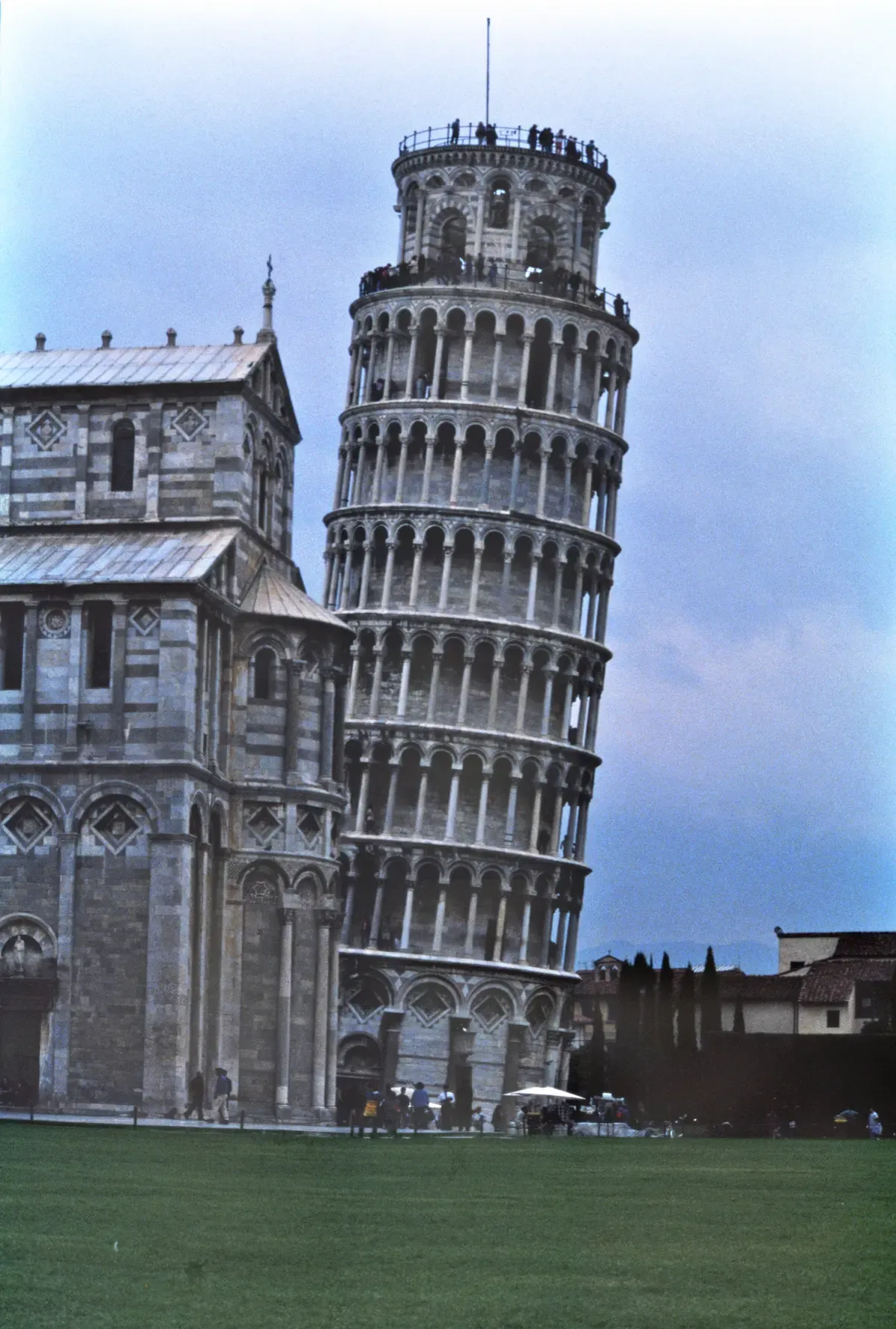
A film photo of the tower from 1989, before the stabilisation work of the 1990s. Photo: pedrik, CC BY 2.0, via Wikimedia Commons
Why is it important
Piazza del Duomo, Pisa was inscribed on the UNESCO World Heritage List in 1987, covering 8.87 ha with a 254 ha buffer zone, under criteria recognising the cathedral, baptistery, bell tower and Campo Santo. UNESCO also notes that Galileo observed a swinging bronze chandelier in the cathedral, which fed his early work on dynamics. More than 5 million people visit the tower each year.
One surprise: Pisa does not hold the world record. The most inclined tower in the world is the bell tower of Suurhusen in Lower Saxony, at almost 5.07 degrees, more than Pisa's 3.97 degrees.
| Measure | Figure |
|---|---|
| Height, low side | 55.86 metres |
| Height, high side | 56.67 metres |
| Weight | about 14,500 tonnes |
| Lean | about 4 degrees, 3.9 metres from vertical |
| Climb | 251 steps on the Tower visit |
| Bells | 7 |
Sources: UNESCO World Heritage Centre, Visit Pisa.
Did Galileo really drop cannonballs from the tower?
A legend says he did, but it is a story rather than a documented experiment.
Many myths cling to the tower. The most famous is the physics experiment.
Myth two, it was built to lean
No builder wanted a leaning bell tower. The tilt appeared by accident in the late 1170s because of the soft ground, and every later attempt to hide it only shaped the tower's curve. The lean is a flaw that became the attraction.
Source: UNESCO World Heritage Centre.
Can you still tour the Leaning Tower of Pisa?
Yes, the tower reopened to visitors in 2001 after the stabilization work and you can climb it today.
Climbing is one of the strangest experiences in Italy, because the spiral staircase pulls you sideways as you walk.
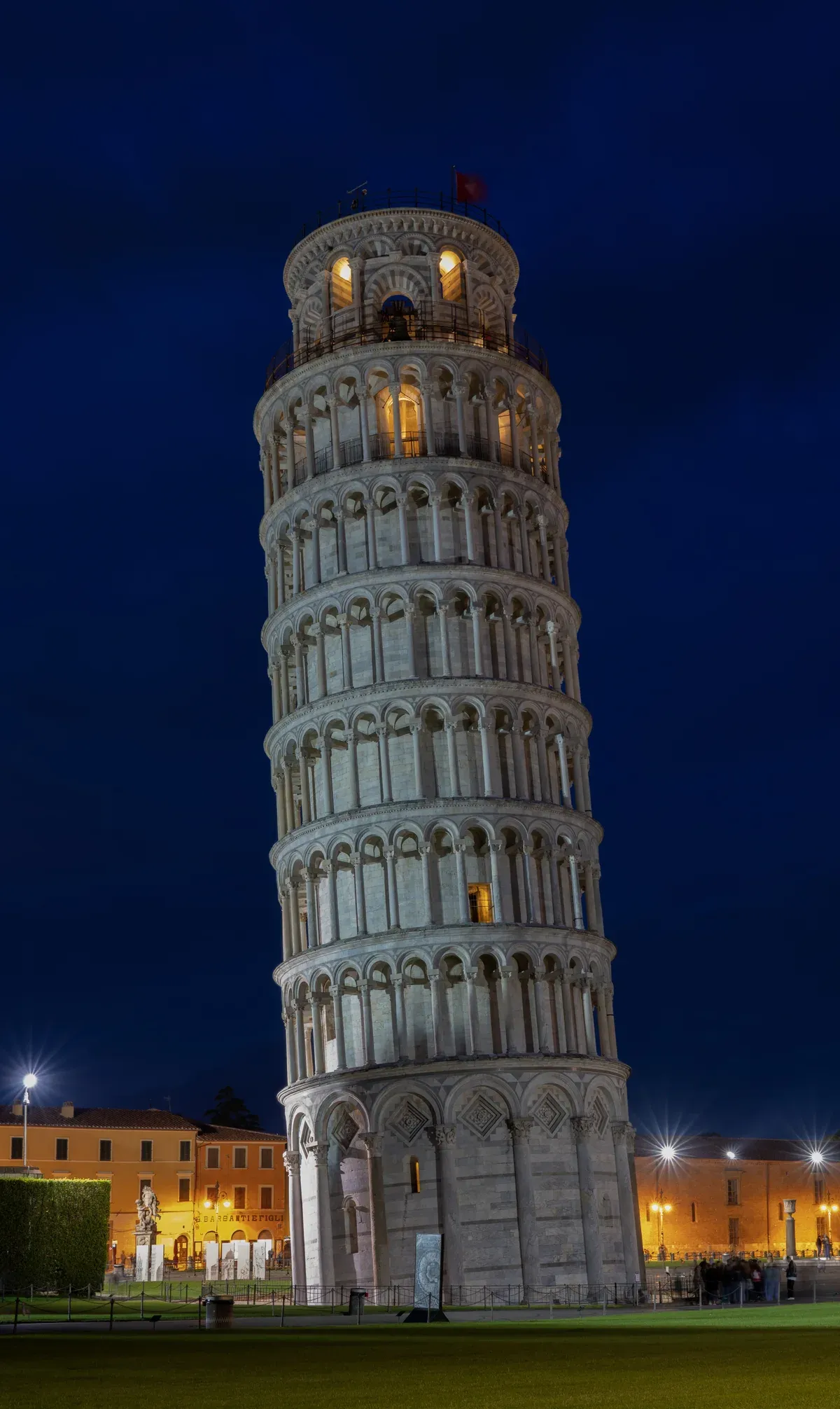
The tower at night, lit from below. Photo: PaestumPaestum, CC BY 4.0, via Wikimedia Commons
Visiting with kids or a guided trip
Children under 11 with an adult enter the Cathedral, Baptistery, Camposanto and the two museums free without a ticket, so the square is workable for families even if the youngest cannot climb. If you want the climb, transport and timing handled for you, a guided pisa tours from florence package covers the whole day.
Sources: Opera della Primaziale Pisana, Opera della Primaziale Pisana.
How to get to the Leaning Tower of Pisa from Florence?
Regional trains from Firenze Santa Maria Novella reach Pisa Centrale in about 1 h 22-23 min, then it is a 2.89 km walk to the square.
The tower sits in Piazza dei Miracoli, north of the centre of Pisa, and the trip from Florence is easy in half a day.
By bus or on a tour
Autolinee Toscane's urban single ticket for Pisa costs €2.00, or €3.00 bought from the driver, according to the operator's ticket page. The simplest option is a guided half-day tour that does the driving for you and drops you close to the square.
Sources: Rete Ferroviaria Italiana, Visit Pisa, PisaMover, Trenitalia, Autolinee Toscane.
Frequently Asked Questions
Is Pisa tower 7 Wonders of the World?
No. The Leaning Tower is not one of the Seven Wonders of the World. It is the bell tower of the Piazza del Duomo, which UNESCO inscribed on the World Heritage List in 1987 together with the Cathedral, the Baptistery and the Camposanto. You can see all four on one of the Pisa tours from Florence.
Is the Leaning Tower of Pisa still moving?
No. Sensors showed the motion stopped in 2008 with a total improvement of 19 inches, and there has been no measured movement since, according to Britannica.
Is it possible to straighten the Leaning Tower of Pisa?
Engineers chose not to straighten it fully. The 1993 to 2001 project reduced the tilt from 5.5 degrees to 3.97 degrees, keeping the famous lean while making the tower safe.
Can you just walk up to the Leaning Tower of Pisa?
Yes. The square is free to enter and the Cathedral itself is free. Only the tower climb, the Baptistery, Camposanto and the museums need tickets, and tower entry costs €20 according to the Opera della Primaziale Pisana.
How much does it cost to go inside the Leaning Tower of Pisa?
The tower ticket costs €20 and has no reduced rate, according to the Opera's benefits page. Every ticket also includes a free Cathedral pass with no fixed time.
Leaning tower of pisa with kids
Children under 11 with an adult enter the Cathedral, Baptistery, Camposanto and both museums free without a ticket, but the tower itself admits no child who will not have turned 8 by the end of the year, per the Opera's rules.
Leaning tower of pisa in winter
The Opera publishes seasonal hours for the square, and winter opening changes by period, so check the official opening and closing page before you go. From 13 November to 20 December the Tower opens 9:00 am to 6:00 pm. Dress warmly for the 30 minute visit.
Leaning tower of pisa tour reviews
Our half day trip to Pisa from Florence with Gray Line is rated 4.4 from 2,107 reviews, and the Ciaoflorence half-day with optional tower entry is rated 4.5 from 2,243 reviews.
More Guides
- How Do You Get from Florence to Pisa: Train, Bus or Tour?
Florence to Pisa by regional train takes about 1 h 22 min. Compare train, bus, car and tours and plan your day trip. 2027
- Is Pisa Worth Visiting on a Day Trip from Florence?
Is Pisa worth visiting from Florence? See the go or skip verdict, tower tickets, crowds and the best day tours in 2027.
- Can You Climb the Leaning Tower of Pisa?
The Leaning Tower of Pisa climb is 251 steps in a 30 minute slot. See the age, bag and ticket rules and book your timed slot for 2027.